
Does a Wine Cellar Have to Be in a Basement?
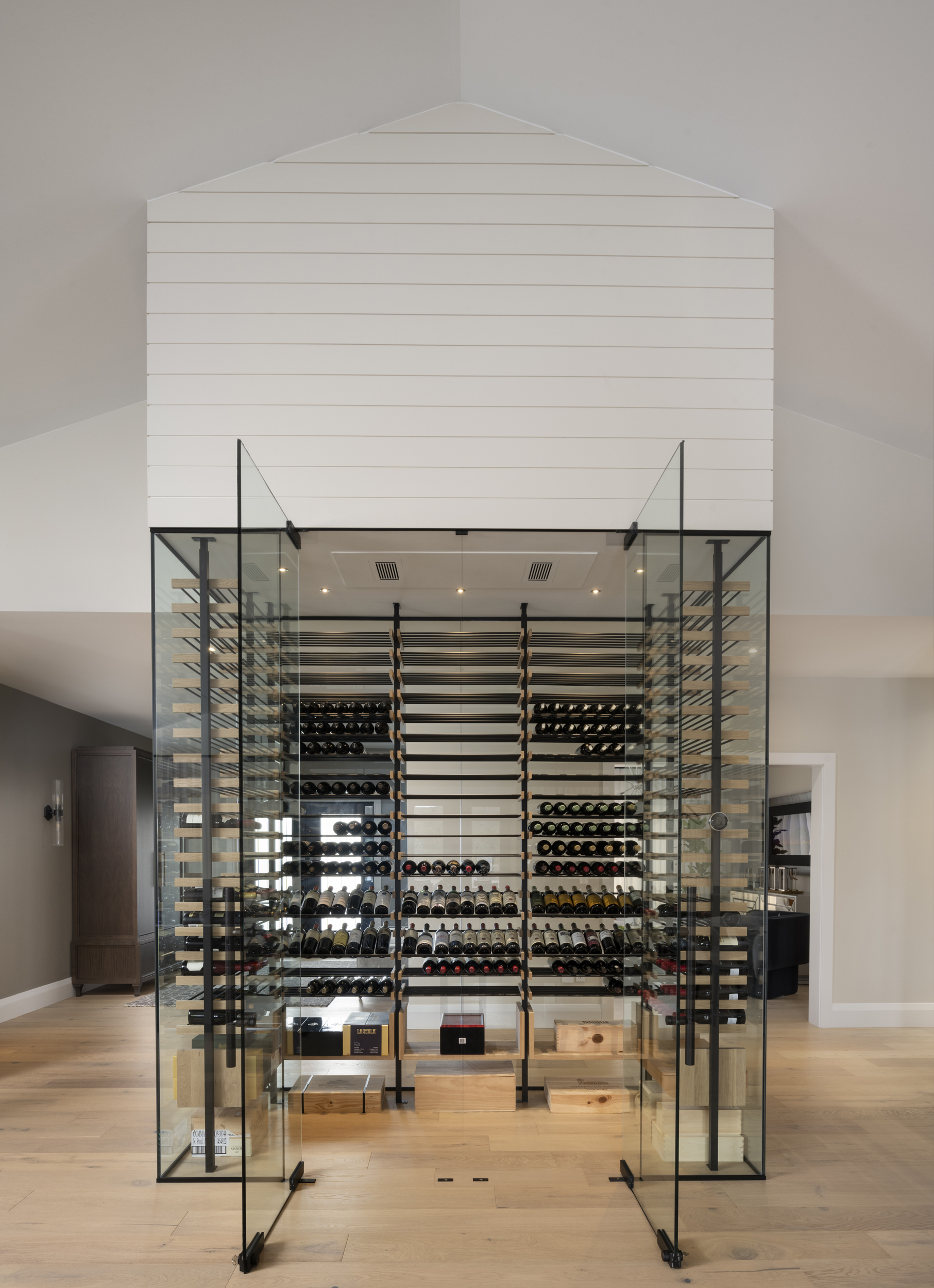
For decades, the common assumption was simple: if you wanted a proper wine cellar, it had to be buried underground.
Historically, subterranean spaces were the only areas in a home that naturally provided the cool, dark, and damp conditions required to preserve fine wine. Old-world cellars relied on thick stone foundation walls and surrounding earth to maintain steady temperatures and protect delicate vintages from heat spikes.
However, modern architecture and advancing building science have fundamentally changed how luxury homes are designed.
The short answer is no; a wine cellar does not have to be in a basement.
Today, wine enthusiasts can place a fully climate-controlled custom wine room on almost any floor of their home. From elegant dining room feature walls to glass enclosures under main staircases, high-end wine storage has evolved into a centerpiece of modern interior design.
Why Wine Cellars Are Moving Upstairs
The migration of wine storage from the basement to the main living area is driven by two major factors: changing lifestyle trends and innovations in wine cooling technology.
1. Basements Have Evolved Into Active Living Spaces
In modern home design, basements are rarely damp, neglected storage areas. Homeowners now transform lower levels into home theaters, fitness studios, guest suites, and family recreation rooms. Because basements are actively heated and air-conditioned for human comfort, they no longer naturally maintain cellar conditions without dedicated insulation and cooling systems.
2. Wine as an Architectural Focal Point
Wine collections are no longer meant to be hidden away underground. Collectors want to share their passion with family and guests. Placing a custom wine cellar on the main floor turns your collection into a stunning visual feature in dining rooms, living spaces, kitchens, or entry foyers. A floor-to-ceiling glass wine display adds depth, sophistication, and immense artistic value to modern home interiors.
Creative Non-Basement Wine Storage Ideas
When you free your mind from the idea that wine must live underground, the design possibilities open up dramatically. With proper engineering, unused areas on your main floor or upper levels can become bespoke wine features.
- Glass Enclosed Main Floor Wine Rooms: Located adjacent to dining or living areas, transparent glass enclosures provide a sleek, contemporary showcase while maintaining strict environmental controls.
- Under the Stairs Cellars: The unused cavity beneath a main staircase offers ideal dimensions for modern rack displays, floating cable systems, or custom wood millwork.
- Kitchen and Dining Room Alcoves: Converting an oversized pantry, closet, or wall alcove creates an accessible wine display right where you serve food and host dinner parties.
- Condo and Apartment Wine Storage Walls: High-rise dwellers can enjoy climate-controlled wine storage by converting living room wall niches into compact, custom-engineered wine cabinets.
Essential Building Science for Above-Ground Cellars
While building an above-ground wine cellar offers immense design freedom, it also requires strict technical precision. Main floor environments face natural light, HVAC temperature swings, and higher ambient humidity changes than subterranean rooms.
To preserve your investment, an above-ground wine cellar must be engineered with advanced building science in mind.
Dedicated Wine Cooling Systems
Standard residential air conditioning units only cool a room to around 68 to 72 degrees Fahrenheit (20 to 22 degrees Celsius) and strip moisture from the air. Proper wine preservation requires a steady 55 to 58 degrees Fahrenheit (13 to 14 degrees Celsius) with 50% to 70% relative humidity. Above-ground cellars require specialized split or self-contained wine cooling units designed for continuous operation.
Thermal Insulation and Vapor Barriers
To prevent condensation, mold, and energy loss, every wall, ceiling, and floor surrounding an above-ground cellar must be properly insulated. A continuous vapor barrier must be applied to the warm side of the insulation to keep moisture balanced.
UV-Protected Thermal Glass
If your main floor wine cellar features glass walls or doors, standard single-pane glass will fail. High-performance wine rooms require double-paned or triple-paned thermopane glass with Low-E coatings to block harmful ultraviolet light and prevent thermal transfer.
When Does a Basement Cellar Still Make Sense?
Although main floor cellars are increasingly popular, subterranean locations still hold distinct advantages in specific scenarios:
| Factor | Main Floor Wine Room | Basement Wine Cellar |
| Primary Goal | Visual display and entertaining focal point | High-volume long-term storage |
| Capacity | Ideal for 100 to 1,000 bottles | Ideal for 1,000+ bottle collections |
| Aesthetics | Modern, sleek, glass-forward | Traditional, old-world, subterranean cave feel |
| Thermal Efficiency | Requires higher insulation rating | Naturally benefits from surrounding earth temperature |
If you own an expansive collection numbering in the thousands of bottles, or if you prefer the classic ambiance of reclaimed brick, arched stonework, and rich mahogany cabinetry, a traditional basement installation remains an incredible choice.
Transform Your Vision Into a Custom Masterpiece
Whether you prefer a dramatic glass feature wall in your dining room or a subterranean sanctuary for long-term vintage aging, the key to success lies in proper design and expert construction.
At Imagination Wine Cellars, we bring over 20 years of professional design experience and refined building science to every project. From initial concept and 3D layout to precision climate integration and custom millwork installation, we turn your ideas into a bespoke wine storage space tailored to your lifestyle.
Ready to explore the potential for a custom wine cellar in your home? Contact Imagination Wine Cellars today to schedule your design consultation.
