
How to Choose a Wine Cellar Cooling Unit: A Guide for Toronto Homeowners
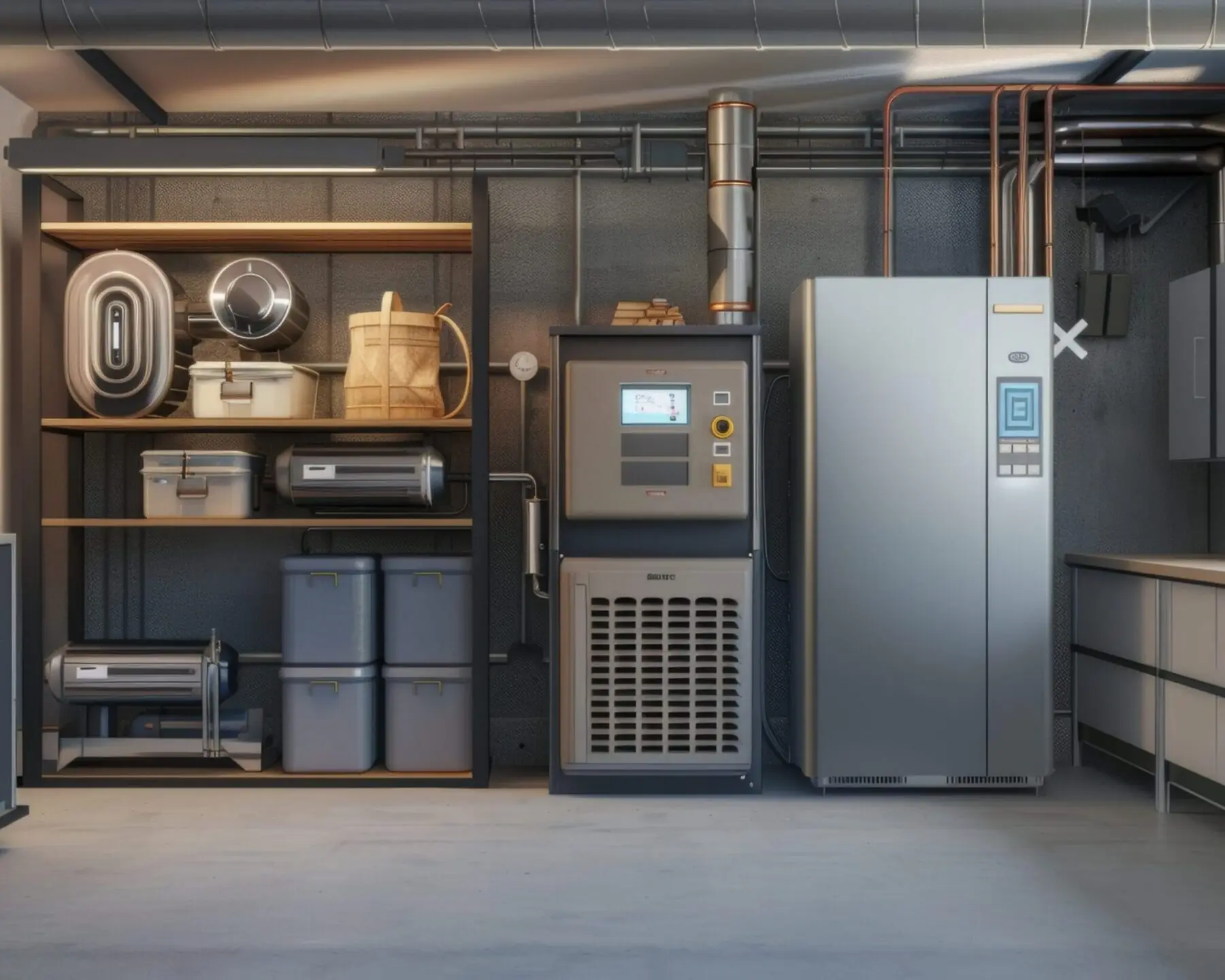
The cooling unit is the heart of every wine cellar. Racking, glass and lighting create the look, but the cooling system is what keeps your collection at the steady temperature and humidity wine needs to age well. Choose the wrong unit and you may face a room that never quite gets cold, constant noise, fogged glass, or equipment that wears out years early.
This guide explains the main types of wine cellar cooling systems, how they are sized, and what Toronto homeowners should think about before choosing one.
Why a Regular Air Conditioner Will Not Work
It is tempting to cool a wine room with a window unit or the home’s central air. The problem is that household air conditioners are designed to make people comfortable, not to protect wine:
- They are built to cool to around 20 degrees Celsius, not the 12 to 14 degrees Celsius a cellar needs.
- They remove moisture from the air, which can dry out corks over time.
- They cycle on and off in ways that create temperature swings.
- Running them constantly at cellar temperatures can cause coils to freeze and the unit to fail.
A dedicated wine cellar cooling unit is engineered to hold a cool temperature and a healthy humidity level of roughly 50 to 70 percent, all year long.
The Main Types of Wine Cellar Cooling Systems
Self Contained Through the Wall Units
These units mount in a wall between the cellar and an adjacent room. The cold side faces the cellar and the warm side exhausts heat into the space behind it.
- Best for: Smaller cellars and simpler installations
- Advantages: Lower equipment cost and straightforward installation
- Things to consider: The room receiving the exhaust heat must be large enough and well ventilated, and you will hear the unit inside the cellar
Ducted Self Contained Units
The unit sits outside the cellar, often in a mechanical room, attic or nearby closet, and connects to the cellar with insulated ducts.
- Best for: Homeowners who want a quiet cellar and a clean look
- Advantages: Only discreet grilles are visible inside the room, and most of the noise stays elsewhere
- Things to consider: It needs a suitable location for the unit and space for duct runs
Split Systems
Split systems separate the components. An evaporator handles cooling inside or near the cellar, while the condenser sits outdoors or in a remote location, connected by refrigerant lines.
- Best for: Larger cellars, glass enclosed rooms, and luxury builds where quiet operation matters most
- Advantages: The quietest option, with the heat and most of the noise removed from the home
- Things to consider: Installation requires a licensed refrigeration technician and careful planning
You can compare these options in more detail on our wine cellar cooling units service page.
How a Cooling Unit Is Sized
Choosing a unit by bottle count or room size alone is one of the most common mistakes. Proper sizing is based on a heat load calculation that considers:
- Room volume: The total cubic footage of the cellar.
- Insulation: The R value of the walls and ceiling and the quality of the vapour barrier.
- Glass: Glass walls and doors let in far more heat than insulated walls.
- Surrounding temperature: A cellar next to a warm furnace room or on a sunny main floor needs more capacity than one in a cool basement.
- Lighting and equipment: Every heat source in the room adds to the load.
- Door seals: Gaps around doors allow warm, humid air to leak in.
An undersized unit runs constantly and struggles in summer. An oversized unit cycles on and off too quickly, which can lead to poor humidity control. The goal is a unit matched to the room.
Cooling Considerations for Canadian Homes
Ontario seasons are hard on cellars. Humid summers raise the cooling load, while dry heated winters can pull humidity down. A few local considerations:
- Basements offer natural stability, but furnace rooms and laundry rooms nearby can add heat.
- Main floor and above grade cellars are absolutely possible but need stronger insulation and well sized cooling. Learn more in our article on whether a wine cellar has to be in a basement.
- Outdoor condensers for split systems must be rated for Canadian winters.
- Humidity control may require a humidifier in drier months, depending on the room.
Noise, Placement and Drainage
Before choosing a system, think about how you will use the room:
- If you plan to host tastings inside the cellar, a ducted or split system keeps conversation free of mechanical hum.
- Every cooling unit produces condensate, so a plan for drainage is needed.
- Units need access for future service, so they should never be sealed behind finished walls.
Keep Your System Running for Years
Like any mechanical equipment, a wine cellar cooling unit performs best with regular care. Cleaning coils, checking drainage, confirming refrigerant levels, and monitoring temperature and humidity help prevent breakdowns that could put your collection at risk. Our wine cellar service and maintenance team helps owners keep their systems in top condition.
Frequently Asked Questions
What temperature should a wine cellar be?
Most collectors keep their cellar at about 12 to 14 degrees Celsius (roughly 55 degrees Fahrenheit), with stable humidity between 50 and 70 percent.
What is the quietest wine cellar cooling system?
Split systems are typically the quietest because the condenser and most of the noise are located outside the cellar, often outside the home.
Can I install a wine cellar cooling unit myself?
Some self contained units are simpler to install, but sizing, sealing, drainage and electrical requirements still matter. Split systems require a licensed refrigeration technician.
How long does a wine cellar cooling unit last?
Lifespan depends on the quality of the unit, how well it is sized, and how regularly it is serviced. A properly sized and maintained system lasts significantly longer than one that is overworked.
Get Expert Help Choosing Your Cooling Unit
With over 20 years of experience designing and building bespoke wine cellars, Imagination Wine Cellars sizes, installs and services cooling systems for wine cellars across Toronto, the GTA, Ontario and the USA. We match the right system to your room, your design and how you plan to enjoy your collection.
Need help choosing the right cooling unit for your cellar? Contact Imagination Wine Cellars today to book a consultation.